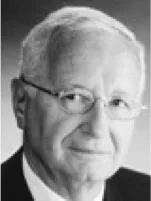
Franz Gschnitzer
Franz Gschnitzer was born on November 29, 1929 in Innsbruck († April 30, 2014). He completed primary school, secondary school, and his medical studies in his hometown and received his doctorate with distinction in 1953. Gschnitzer began his postgraduate training at the Institute of Pathological Anatomy in Innsbruck under Prof. Lang. After two years he transferred to the University Department of Surgery, where he performed his first surgical procedures under Prof. Breitner. Due to an acute shortage of positions, he could not be taken on as an assistant after one year of training.
He therefore moved to the Department of Surgery in Tübingen to work under Prof. Dick, where he remained from 1957 to 1961; in 1961 he obtained his board certification in surgery. During this period, Gschnitzer had the opportunity—during a four‑month leave of absence – to work with Prof. Derra in Düsseldorf, where he focused on questions of cardiac surgery, a field that immediately fascinated him.
As the construction of the new surgical department in Innsbruck created the possibility of establishing a cardiac surgery program there, and after consulting with Prof. Huber, Gschnitzer returned to Düsseldorf for four years in order to receive advanced training in cardiac surgery. During this stay he also wrote his habilitation thesis, “Minimal Perfusion of the Pulmonary Circulation During Cardiopulmonary Bypass.” In May 1965, Gschnitzer returned to Innsbruck, where he worked as a senior surgical consultant and established cardiac surgery in Innsbruck.
In 1968- -the year of his habilitation – the new clinic was inaugurated. As early as 1969, he performed the first open‑heart surgery using a heart–lung machine. After Huber’s retirement, Prof. Baumgartner became acting head of the Department of Surgery. In 1972, the special departments created by Huber were converted into independent university clinics.
We accompanied him along part of his further professional path and witnessed many innovations during this period: Gschnitzer reintroduced the Billroth I gastrectomy, a procedure frequently used by Prof. von Haberer in the 1920s that had since fallen out of use. He also successfully established colon interposition after esophagectomy, as well as staged procedures for carcinomas of the left hemicolon, and thymectomy for the treatment of myasthenia gravis. The development of transplant surgery at our clinic brought numerous new surgical and scientific aspects. Particularly noteworthy is that in 1980, the first heart transplant in Innsbruck was performed by Margreiter with Gschnitzer’s assistance.
During his tenure as full professor, further milestones in general surgery were achieved, such as the first laparoscopic cholecystectomy and the introduction of specialized oncologic surgical techniques performed for the first time in Innsbruck. Diagnostic and interventional endoscopy, surgical ultrasonography, and chemotherapy for solid tumors also saw decisive advancements, without which “modern” surgery would be unimaginable today.
Although, for organizational reasons, Gschnitzer increasingly had to delegate responsibility for cardiac surgery as head of the surgical department, his special interest in this field remained evident – for example, through his support of the screw‑spindle pump developed by his colleague Josef Hager, a centrifugal, displacement‑type cardiac assist device.